
McDonough Police Blotter Source Map
McDonough County publishes no countywide blotter that rolls several days of bookings into one list. The sheriff's site offers no multi-day archive. That gap leaves four kinds of material. Police-report batches, city releases, dated municipal lists, and event stories each cover arrest activity. Each comes with its own limits.
The Community News Market police reports cover sheriff, Macomb Police, and Western Illinois University public-safety items. They pull those short runs into one place. Macomb keeps its own media-release archive. Regional Media once ran a structured Macomb arrests-and-citations list for a dated period. WGEM and TSPR pick events as editors see fit. None of these answers who is in custody right now. For that question, the McDonough County jail is the only authoritative source.
Read McDonough Arrest Reports Correctly
Start with the dates. A page's update stamp often lands later than the arrests it describes. Some reports cover the incident first and the arrest days after that. Keeping those times straight stops an old blotter entry from passing as current custody. That matters in McDonough County.
- Identify the date range printed in the report or release, not merely the web page's latest update date.
- Note the named arresting agency. A city police report and a county jail booking record are held by different offices.
- Copy the charge exactly as attributed. Treat it as alleged and do not convert it into a finding of guilt.
- Check whether the source says the person was taken to McDonough County Jail, released, cited, or held elsewhere.
- Use the agency's official record route for the report and Judici or the circuit clerk for the later case and disposition.
Need a present custody check? The Arrests Last 24 Hours page answers named-person questions faster than a blotter can. The blotter has a different job. It helps you rebuild a multi-day sequence. Then you can figure out which McDonough County office holds the source arrest record. Note: A name missing from a local news batch does not prove that no arrest occurred during that period.
McDonough Arrest Log Entry Fields
Every publisher picks its own fields. Community News Market reports can carry names, ages, home cities, listed charges, warrants, and a note about transport to the county jail. The Regional Media example used a tighter municipal format. An official narrative release describes the incident and investigative steps instead, so compare only the fields a source actually provides.
| Field | How to read it |
|---|---|
| Report or incident date | The event date; it may differ from arrest, booking, and publication dates. |
| Arrest date and time | When the agency says custody began, if stated. |
| Agency and officer | The office responsible for the listed enforcement action and likely report holder. |
| Name and identifiers | Details used to distinguish people; confirm through a primary source before relying on a match. |
| Location | The reported event or arrest place, subject to lawful withholding. |
| Offense code and description | The charge or citation as reported at that point, not the final court outcome. |
| Bond and court date | Time-sensitive details that may change after the list is published. |
| Custody destination | Whether the account says the person went to McDonough County Jail or another authority. |
| Image and caption | Often a scene, agency, file, or reporter image, not necessarily a booking photo. |
Multi-day sources mix arrests with citations, warrants, and plain incident reports. Those are not the same thing. A citation may never reach a jail booking, and a warrant item may describe an old court order rather than a new arrest. Read the label first.
Three McDonough Arrest News Rhythms
Arrest news in McDonough County runs on three schedules. One is the periodic police-report batch. Community News Market publishes short date windows that combine sheriff, Macomb Police, and WIU public-safety reports. Another is the dated period list, like Regional Media's Macomb arrests and citations page. The third is event-driven reporting. WGEM and TSPR cover a case only when editors find it newsworthy, so routine arrests go unreported.
| Source rhythm | Coverage and limit |
|---|---|
| Periodic report batch | Several agencies and a short span; not a jail intake ledger. |
| Municipal period list | Structured Macomb entries for a stated range; not countywide. |
| Official city release | Selected incident narratives; not a continuous daily list. |
| Event news story | Selected cases with context; editorial choice makes it incomplete. |
The TSPR live-update archive follows events and court dates, not a booking window.
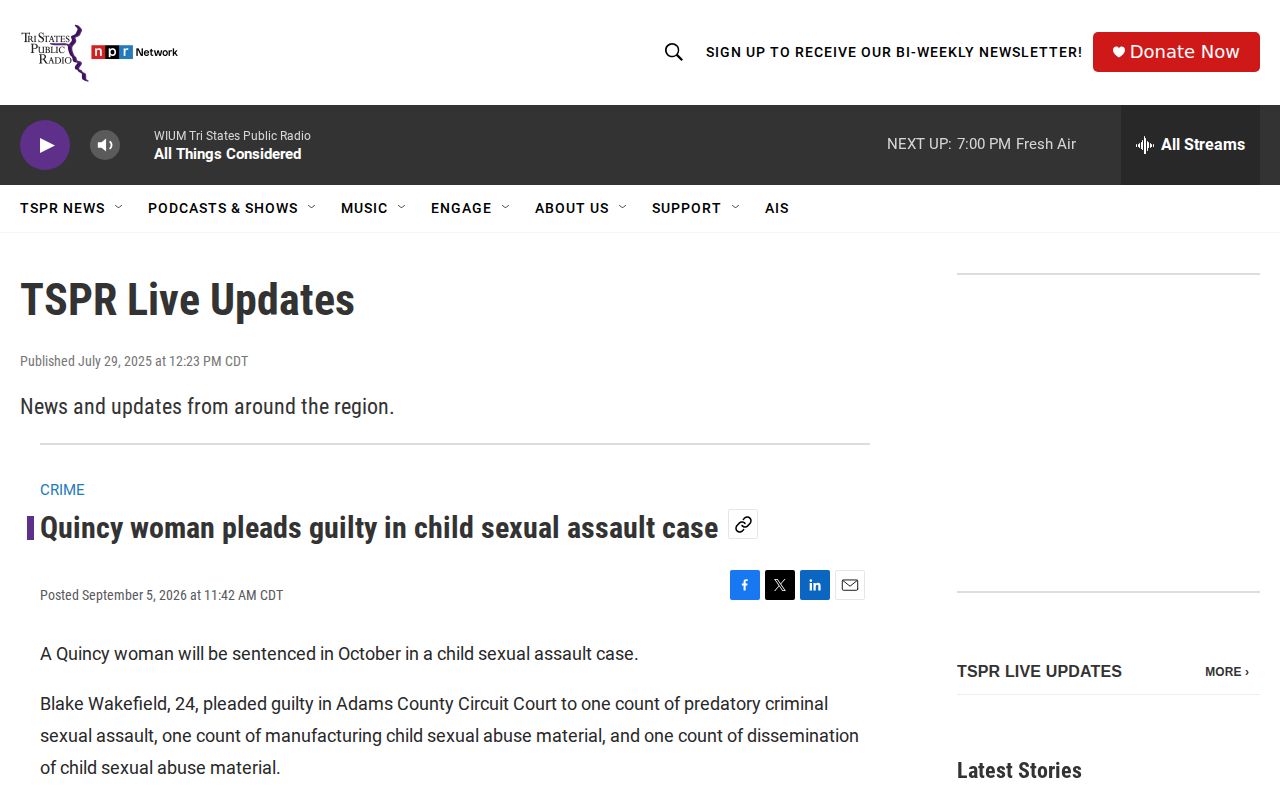
It preserves context and publication dates. Still, it is no substitute for a full McDonough County arrest roster.
Macomb Arrest Releases Use Two Formats
The official Macomb Police media-release archive and the Regional Media period list serve different purposes. A city release is an agency narrative. It may name investigators, other agencies, the reported sequence of events, and the charges police announced. A period list runs in table form. It can list date, time, location, officer, demographic fields, offense code, bond, and court date. Neither one is the sheriff's daily book. Do not merge them blindly. Publication dates can overlap while the records differ. When a detail conflicts, request the Macomb Police report and the later court record rather than trusting the easier web page.
A Macomb arrest may end at the county jail. That transfer still does not turn the city report into a McDonough County record. Four agencies work McDonough County. City police, sheriff deputies, Illinois State Police, and WIU public safety each write their own incident reports. Each record stays its own. So the jail alone cannot tell you who created the report on a McDonough County arrest.
McDonough Arrests Move to Court
Arrest and court are two systems that touch but never merge. A TSPR report described a McDonough defendant appearing by Zoom straight from the county jail. Custody and court overlapped there, yet each kept its own record. A jailed person can attend a hearing. The booking file says nothing about the judge's ruling. Getting released from jail doesn't erase the case either.
For public case records, the Judici McDonough case search is the online route. Search by name or case number. Then compare identifiers carefully. Sealed matters and juvenile cases stay limited. Name variations, captcha limits, and uneven online documents shape what appears too. When a public case or paper isn't online, follow up with the McDonough County Circuit Clerk. That office is the authoritative place for the record.
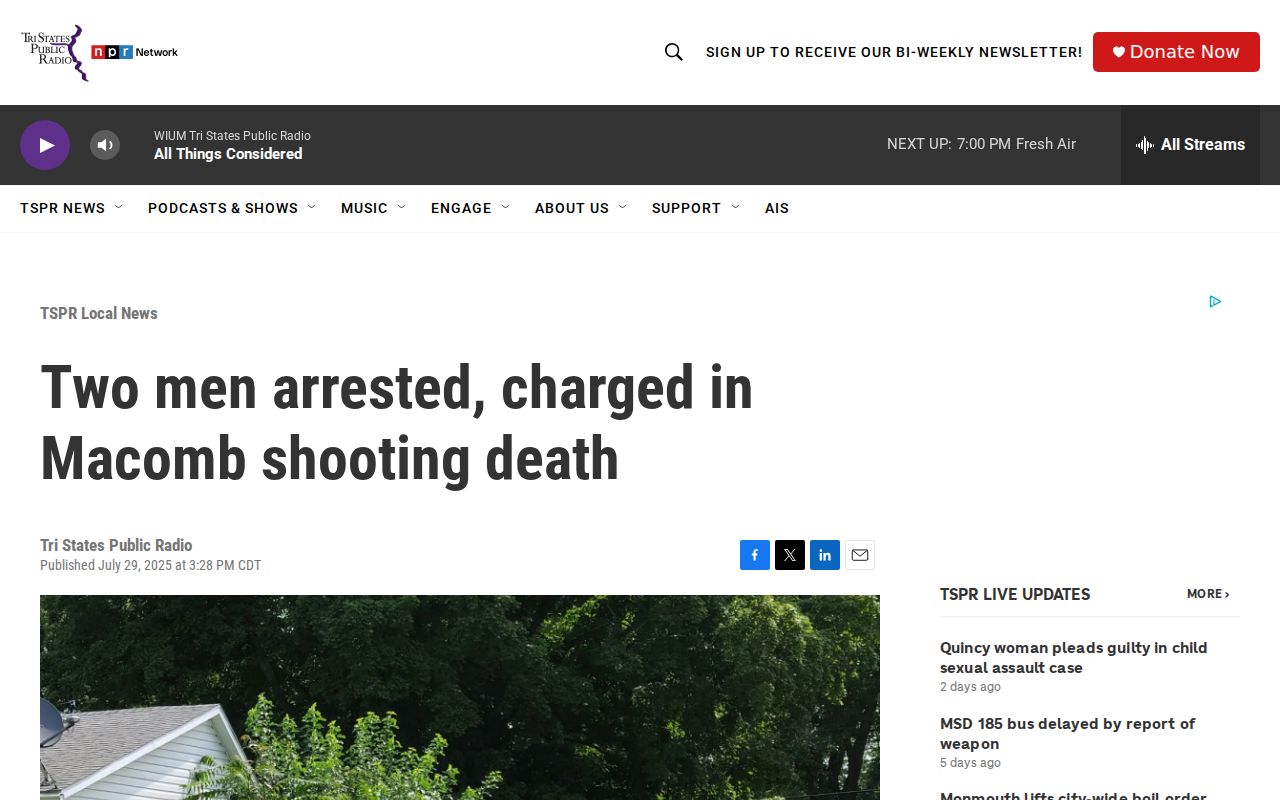
The article covers one event. It's journalism, not a booking gallery or a substitute for the court docket on a final disposition.
McDonough Arrest Counts Need Context
Not every arrest number counts the same thing. Macomb Police council material reported adult-arrest totals for specific municipal periods. Crime Stoppers publishes program statistics tied to tips and outcomes. Neither is a countywide booking count. Mixing them into one "trend" would blend different agencies, definitions, dates, and purposes.
Before quoting any arrest count, note who published it. Record the agency, the geographic scope, the covered dates, and whether citations are included. Also ask what the figure actually counts: incidents, people, charges, bookings, or program results. One arrested person can face several charges. A transfer into McDonough County Jail may also involve another jurisdiction. Raw totals mislead easily.
Use a count only for what its source says it covers. A police activity report describes one department's workload. It can't stand in for the missing county blotter. It also can't tell you how many people were in the McDonough County Jail on some other date.
McDonough Arrest Archives Require Requests
McDonough County publishes no public blotter page. No depth of coverage can be traced there. For every release or archive item you do find, note the basics. Save the title, URL, publisher, and covered dates. Record the publication date, access date, named agency, and source type. A story vanishing from search results doesn't mean the public record behind it was destroyed.
Illinois records rules require government offices to follow authorized retention and disposal schedules. For older material, request it directly. Ask the arresting agency for a fixed date range and a specific set of fields. The sheriff or jail keeps booking and custody data. A city police department holds its own arrest and incident reports. The circuit clerk keeps court filings and disposition records. Staff don't have to build a dataset the office never maintained.
The McDonough County historical newspaper directory can point you to older publications. It is not a source for current bookings.
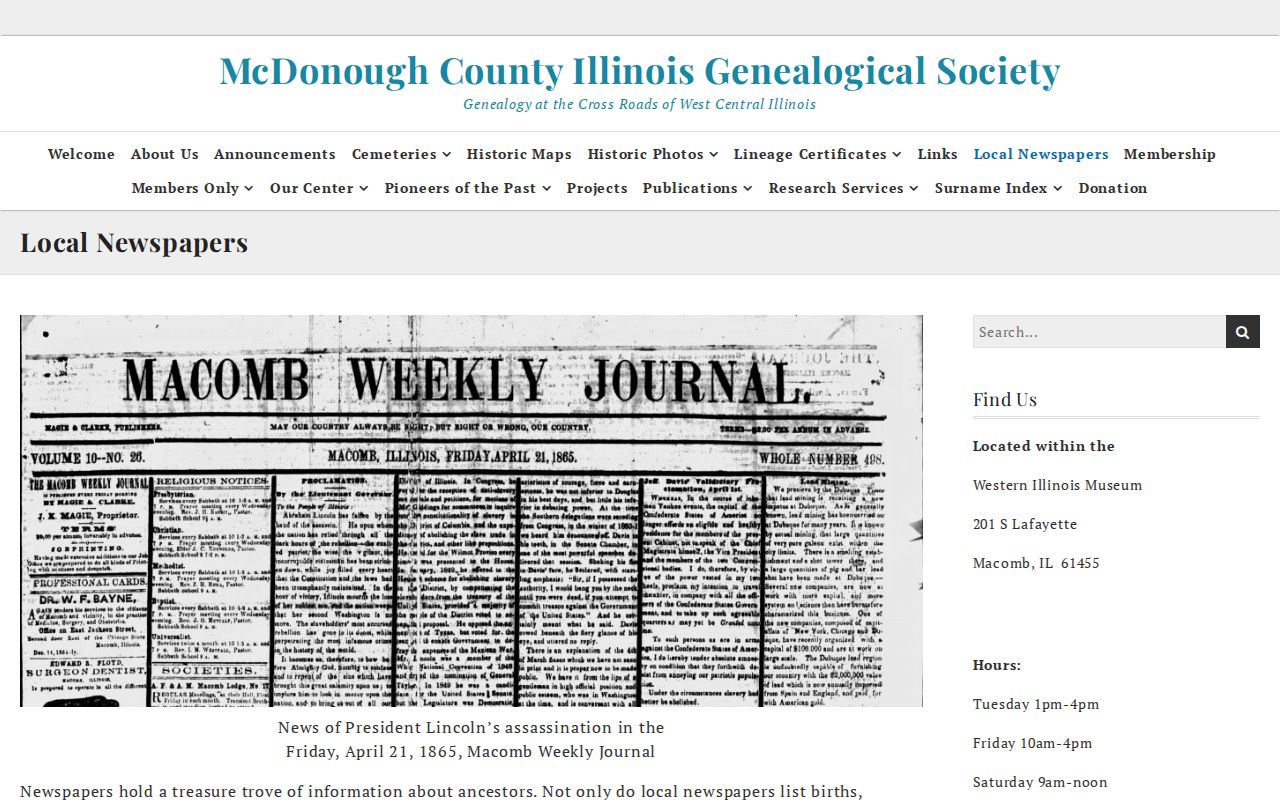
Historical newspaper paths can surface old arrest coverage. Confirm any fact against the agency or court record, and keep corrections or later dispositions with the timeline.
Unofficial McDonough Arrest Archives
Start with official sources. Among third-party sites, the one named county section is Mugshots.com's McDonough County archive, a filterable archive whose years run only through 2021. It is not a live feed, a custody source, or a court record. Treat its names, charges, photos, and statuses as leads. Check each one against the originating agency and the court.
Other familiar sites come up short locally. Busted Newspaper lists no McDonough entry in its Illinois county index. RecentlyBooked skips the county, and its direct route doesn't work. Arrests.org offers a state search with no McDonough section. Mugshots.zone returns no county result. Those gaps only mean thin local coverage on those sites, nothing about whether an arrest happened.
Local news photos deserve the same caution. WGEM and TSPR often run scene shots, images of deputies or reporters, or file photos. Call an image a booking photo only if the source caption does, and never copy faces into a gallery.
Public Record Search
Sponsored Results